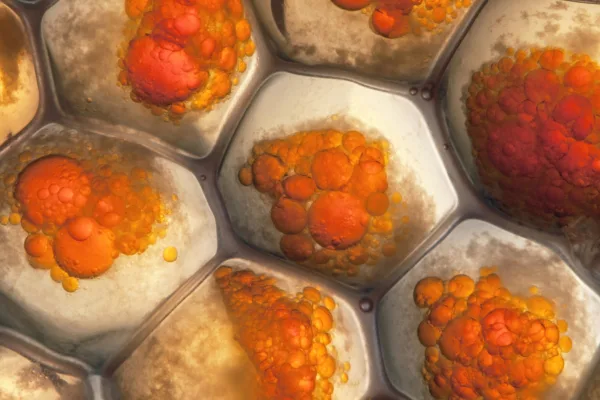
Brown adipose tissue, commonly known as brown fat, is a specialised type of fat tissue that generates heat through a process called non-shivering thermogenesis. Unlike white adipose tissue that primarily stores energy, brown fat actively burns calories to produce heat. This unique property makes brown fat activation a promising target for metabolic enhancement and weight management strategies.
Brown fat is characterised by its high mitochondrial content and expression of uncoupling protein (UCP1). Uncooupling protein uncouples oxidative phosphorylation from ATP production, resulting in heat generation instead of energy storage. This thermogenic activity contributes to increased energy expenditure and improved metabolic health.
In humans, brown fat deposits are primarily located in the supraclavicular region, which is between your collarbone, the side of your neck and the muscle that runs between the back of your neck and shoulder. Paravertebral area, perirenal spaces, and neck region.
PET-CT imaging studies have shown that brown fat prevalence and activity are decreased with age, are higher in women than in men, are inversely correlated with BMI, and are higher in colder environments.
You can activate the brown fat by
Cold exposure or cold temperature is the most potent physiological activator of brown fat. Cold exposure stimulates sympathetic nervous system activity, releasing norepinephrine that binds to β3-adrenergic receptors on brown adipocytes, activating thermogenesis. The breakdown of fatty acids and glucose fuels thermogenesis.
Regular physical activity enhances brown fat activity through multiple mechanisms. Endurance training promotes the expression of peroxisome proliferator-activated receptor gamma coactivator-1 alpha, leading to browning of white fat. Exercise increases circulating irisin (a myokine released during exercise), which promotes brown fat activation and white fat browning.
Certain nutrients and bioactive compounds can stimulate brown fat activity. Capsaicin, found in chilli peppers, activates transient receptor potential vanilloid 1 channels, mimicking cold exposure and enhancing brown adipose tissue activity. Epigallocatechin gallate, found in green tea, stimulates brown adipose tissue thermogenesis and increases metabolic rate. Resveratrol and curcumin, found in grapes and turmeric, enhance mitochondrial biogenesis and brown adipose tissue activity.
Time-restricted feeding patterns may enhance brown fat activity. Fasting increases norepinephrine release and enhances β-adrenergic sensitivity in brown adipocytes.
Brown fat activation may lead to:
- Increased resting energy expenditure
- Improved insulin sensitivity
- Enhanced glucose homeostasis
- Reduced triglyceride levels
- Increased HDL cholesterol
- Mitigation of age-related metabolic decline.
Brown fat activation presents a good strategy for metabolic enhancement, weight regulation, and disease prevention.
Kripa, is a Specialist Dietitian at The London Obesity & Endocrine Clinic. She has helped many patients overcome weight management barriers. ©Simplyweight
Best obesity clinic in Chennai